


NANOTECHNOLOGY?
Recent developments in the application of Nanotechnology have made it one of the most exciting and innovative technologies of the 21st century. Although it has recently become the trend to use the word "nano" as a marketing and promotional tool, its true meaning is synonymous with access to the properties of substances at the molecular and atomic level. Nanotechnology deals with the analysis, production and application of structures smaller than 100 nanometers.
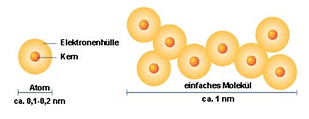
The aim is to understand new properties of objects at the nanoscale level and their effects, and implement this knowledge in technical developments and applications. The word "nano" is derived from the Greek word "nanos", meaning dwarf. A nanometer is one billionth of a meter (0.000 000 001m). A nanometer is to a meter as the diameter of a hazelnut to our planet. A characteristic feature of nanotechnology products is the size of their surface area relative to their volume. For the same volume, these products have a much greater surface area than conventional structures. This is the reason for the extremely good adhesion of Nano products to various substrates. Nanostructures can have physical or chemical properties which cannot be observed in larger (macroscopic) objects. Thus, the chemical nanotechnology brings matter in a different form by intervening in their molecular structure. It creates new materials whose components can be nanoparticles. By varying the composition, shape, size or surface components, these nanoparticles can be brought into new forms, according to the desired properties of the materials.
How nano particles react with each other
In the context of surface coatings, compare the size and behaviour of ordinary particles in traditional coatings to those that are Nano-sized. A nano particle is much smaller and collectively, the mass of nano particles has many more sides to adhere to the substrate. If you consider a cube has 6 faces, if that cube was halved it would have twice as many faces. Consider the Nano as the original cube being sectioned 1000 times. How many faces is that?
How nanoparticles make surfaces smoother
Here we see a traditional coating where the particles are actually too large to adhere to the majority of the substrate. Compare this with the nano coating which not only adheres better to the substrate but also to its own components. Because of this you can apply the nano coating more successfully and thinner than the non-nano coatings. One can also see that the finished result is a much tighter, thinner, stronger and smoother coating.
Coatings, as an example:
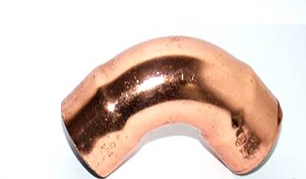
It is expected of coatings that they protect the material upon which they are applied against the effects of external forces and that they bond well with the material to which they are applied. In addition, dust and dirt and other foreign material should not stick to the surface. They should be easy to clean, resistant to chemicals and abrasion. They should have an excellent gloss finish and long-life properties. Which is the coated item below? (Hint – it’s the shiny one on the right)
Some of these properties can be achieved by products which are based on organic solutions (high density and flexibility). Other properties, for example resistance to external forces or anti-corrosive properties – “easy-to-clean” properties (resistance to dust and dirt and simply cleaned) are in products based upon non-organic solutions. Conventional paints (Acrylic, Polyurethane and Plastic) are based on carbon combinations; that is to say on organic solutions. These are not as hard as coatings with non-organic bases such as glass. Non-organic materials such as glass are much harder – but they are also more brittle and less flexible than organic products.
Chemical nanotechnology solves this problem of conflict from the point of view of the user in that nanoscale formulations are composed of organic and non-organic base materials. This results in so-called „hybrid“ coating materials that are tailored to the specific requirements of the desired coating application.
ECO.CALIBRE coatings are therefore especially flexible in their uses: their properties live up to the expectations and wishes of the user far better than coating systems based purely upon either organic or non-organic basis materials.
ECO.CALIBRE is flexible enough to adapt this hybrid formulation to suit any substrate and any application. Unlike many of our competitors, ECO.CALIBRE produce formulations specific to the intended substrate.
ECO.CALIBRE coatings are based on silicon (Si) compositions (silane) together with catalysers and water. An intermediate product results and this is a thin-flowing and clear mixture, which is then heat- treated and condensed to a gel. During this “Sol-Gel” process, organic products are added, depending upon the specific requirements of the coating. As a basic rule, the higher the proportion of non-organic materials in the composition, the harder (but more brittle) is the coating system. The higher the organic proportion, the more flexible (but also less proof against abrasion) is the coating system. It is the great skill of our scientists and engineers that enables us to produce a product that fulfils the specific requirements, by the selection of suitable components to achieve the optimum balance between organic and non-organic base materials.
The SolGel Process
Following this process, dirt & liquids are unable to stick to or get into the surfaces so that they are repellent. This protection applies to various types of contaminants such as fungus, lichen, algae as well as moss that are prevented from adhering to treated surfaces.



© 2016 ECO.CALIBRE
Email: info@ecocalibre.com Website: www.ecocalibre.com Tel: +44 (0) 1347 878 066
ECO.CALIBRE
28 Dale Road
Sheriff Hutton Industrial Estate
York
YO60 6RZ